Civil Rights Complaints Regarding CBP’s Expanded Use of Open-Air Detention

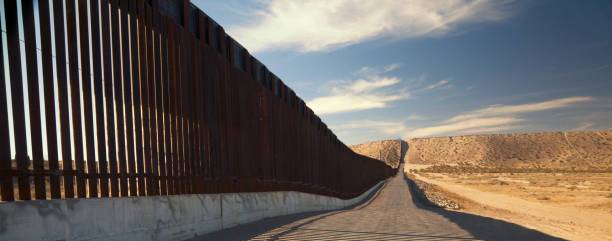
On May 13, 2023, the Southern Border Communities Coalition (SBCC) submitted a complaint to the Department of Homeland Security Office for Civil Rights and Civil Liberties (CRCL). The complaint, which is supported by multiple detailed affidavits and graphic photographs, documents an ongoing Customs and Border Protection (CBP) practice of detaining people outdoors between two fences in deplorable conditions near the San Ysidro port of entry.

Since at least late 2022, U.S. Border Patrol agents have been detaining people arriving at the U.S./Mexico border in California between two parallel border walls—a primary and a secondary wall near San Ysidro. Border Patrol agents are holding people—including children—on U.S. soil for days or weeks in open-air custody without adequate food, water, shelter, or medical care. CBP has provided only one port-a-potty for hundreds of people and the smell of feces is overwhelming.

Extended periods exposed to the elements without sufficient water, food, or sanitary conditions have caused migrants to suffer from serious medical conditions for which Border Patrol is not providing adequate care. SBCC submitted images of a man with a severely infected leg injury, a woman experiencing a severe allergic reaction, and described a child who suffered an epileptic seizure.

The May 2023 complaint explained that these conditions, and the prolonged period of time that Border Patrol is holding people between the walls, are in clear violation of CBP’s own detention standards and international law governing the treatment of migrants.

In September 2023, CRCL responded to the complaint, indicating that it had expressed concerns to CBP about this open-air detention, but that the people detained there had been processed – suggesting the issue had been resolved.

On December 13, 2023, Al Otro Lado, the American Friends Service Committee, Border Kindness, the Center for Gender & Refugee Studies, the International Refugee Assistance Project, and the National Immigration Law Center joined SBCC in filing a new complaint with CRCL documenting the ongoing detention between the walls at San Ysidro and the expanded use of open-air detention near the remote desert town of Jacumba, California. This complaint is similarly supported by declarations and photographic evidence.

The December 2023 complaint reports that CBP continues to hold people between fences at San Ysidro in dangerous conditions. In October 2023, just weeks after CRCL closed its initial investigation, a 29-year-old Guinean woman died after suffering a medical emergency.

Rather than respond to CRCL’s concerns, CBP has expanded outdoor detention. The complaint documents new open-air detention sites near Jacumba — a remote town where temperatures can drop a low as 20 degrees in the winter and hit over 100 degrees in the summer. CBP is holding asylum seekers and other migrants along the border fence with only donated tents or tarps to protect them from the elements. People are trapped by mountains, the harsh surrounding desert, and constant surveillance. The daily population at these sites ranges from 100 to over 750, yet CBP provides only limited water and snacks. Volunteers offer the only meals, shelter (in the form of tents), and warm clothing available. CBP does not provide adequate medical care and in some instances interferes with migrants and volunteers seeking to obtain emergency services. In December, a 13-year-old boy died after EMS took over an hour to reach the remote site. The December 2023 complaint urges CRCL to reopen its investigation and ensure that CBP, at a minimum, comply with its own detention standards if it cannot promptly process people.

Documents:

Counsel: Al Otro Lado, the American Friends Service Committee, Border Kindness, the Center for Gender & Refugee Studies, the International Refugee Assistance Project, the National Immigration Law Center, Southern Border Communities Coalition

Contact: Erika Pinheiro | Al Otro Lado

Bautista v. Mayorkas

Bautista v. Mayorkas, No. 3:22-cv-1185 (S.D. Cal., filed Dec. 8, 2022)

Plaintiff, Mr. Bautista, filed a complaint against the Department of Homeland Security (DHS) and Customs and Border Protection (CBP) seeking the return of his vehicle. Plaintiff alleges violations of the Fourth, Fifth, and Fourteenth Amendments.

On November 4, 2021, Plaintiff’s wife, who is the registered owner of the vehicle, met a friend in Tijuana, Mexico to give her a ride to her job in San Diego. While there, the wife loaned her car to her friend while the wife went to the store. Without the wife’s knowledge, her friend picked up two people who did not have legal status in the United States and concealed them in the trunk. When the wife and friend were stopped at the San Ysidro checkpoint, the wife was made aware of the two individuals. The wife was released without criminal charge because her friend was operating the vehicle when it was seized.

That same day, CBP seized the vehicle. The wife received a Notice of Seizure on November 9, 2021, indicating that the CBP was commencing forfeiture action against the vehicle and provided guidance on how to proceed. On November 19, 2021, the wife filed a petition for return with CBP. Following receipt of notice of seizure, Plaintiff and his wife both filed petitions for return of the seized vehicle with CBP. CBP did not return the vehicle.

On August 12, 2022, Plaintiff filed a complaint with the Southern District of California. On September 21, 2022, Plaintiff filed an ex parte motion for preliminary injunction enjoining Defendants from disposing of his 2021 Nissan Sentra. After full briefing, on October 11, 2022, the court denied the ex parte motion for preliminary injunction as moot because Defendants declared they would hold onto the vehicle until judgment is entered in the case. Subsequently, Defendant filed a motion to dismiss for lack of subject matter jurisdiction because the Civil Asset Forfeiture Act of 2000 divests the court of jurisdiction. The district court granted Defendants’ motion, finding it lacked jurisdiction over the claimant’s challenge to merits of agency’s determination. The Court also denied Plaintiff’s request for leave to file an amended complaint on December 8, 2022.

Documents:

Counsel: Jason E. Ankeny, Jason E. Ankeny P.S.; Kirsten Zittlau, Zittlau Law

ACLU and 137 organizations send letter to CBP Commissioner urging CBP not to detain pregnant, postpartum, and nursing people

Following a February 2020 incident where a pregnant woman was forced to give birth in a California Border Patrol station and then forced to return to the Border Patrol station for postpartum detention after a short trip to the hospital, the ACLU and Jewish Family Service filed a complaint with the DHS Office of the Inspector General (OIG). OIG subsequently investigated and issued a report on the incident, along with recommendations to improve CBP’s processes relating to childbirth. On November 23, 2021, CBP issued its current policy, “Policy Statement and Required Actions Regarding Pregnant, Postpartum, Nursing Individuals, and Infants in Custody.” 

In its October 20, 2022 letter, the ACLU, Jewish Family Services of San Diego, the UCLA Center for Immigration Law and Policy, along with 82 advocacy organizations and 52 medical professionals, urged the Commissioner to expand the current CBP policy to include the following: (1) limit the time people who are pregnant, postpartum, and/or nursing are detained in CBP custody to no more than 12 hours from the initial apprehension, and (2) ensure that people who are pregnant, postpartum, and/or nursing, along with their families, are not transferred back to CBP detention for any reason following discharge from any offsite hospital.

Counsel: Shaw Drake, ACLU; Jewish Family Services; and Monika Langarica, UCLA Center for Immigration Law and Policy

Contact: Monika Langarica | UCLA Center for Immigration Law and Policy | langarica@law.ucla.edu

Additional Links:

Send a message to CBP today demanding that pregnant, postpartum, and nursing persons and infants must be released as soon as possible: Uphold the reproductive rights and health of migrants | American Civil Liberties Union (aclu.org)

A.F.P. and J.F.C. v. United States of America

A.F.P. and J.F.C. v. United States of America, No. 1:21-cv-780 (E.D. Cal., filed May 14, 2021)

Plaintiff A.F.P. and his fifteen-year-old son J.F.C., both citizens of Honduras, approached Border Patrol agents near McAllen, Texas to seek asylum. Instead, Border Patrol agents separated J.F.C. from his father and detained both in a holding facility, often referred to as a hielera or “ice box” for its freezing cold temperatures. The hielera was cold and cramped, and the food provided was frozen and expired.

The two were only permitted to speak to each other for 30 minutes per day. Three days after the two were taken into custody, A.F.P. was charged with illegal entry and taken to federal criminal court. During A.F.P.’s court hearing, CBP and ICE officers designated J.F.C. as an unaccompanied minor, transferred his custody to the Office of Refugee Resettlement (ORR) and moved him to a facility in New York. When A.F.P. returned to the detention center, his son was gone. The officers did not advise A.F.P. of the reason or destination of his son’s transfer.

In New York, J.F.C. resided at the Children’s Village facility, where he was not allowed to communicate with his father, was denied medical care, and was subject to emotional abuse. As a result of this neglect, J.F.C. suffers from hearing loss from an untreated ear infection and severe memory problems because of the trauma he experienced.

During this time, A.F.P. was held in ICE detention in Texas, where he had an interview with an asylum officer and was told he had a credible asylum case. After officers at the detention center put A.F.P. in touch with a notary public who led him to believe that pursuing his asylum case would keep him from reuniting with his son, A.F.P. withdrew his asylum application at his hearing in front of an immigration judge. He was then transferred to maximum security prisons and deported a month later. He was separated from his son for almost fifteen months. A human rights organization later helped A.F.P. lawfully re-enter the U.S. and reunite with J.F.C.

Plaintiffs filed suit against the federal government in the Eastern District of California, seeking damages under the Federal Tort Claims Act (FTCA) for intentional infliction of emotional distress, abuse of process, negligence as to family separation, and negligence. Defendant United States moved to dismiss the claims and moved to transfer the case to the Southern District of Texas. On July 11, 2022, the court dismissed Plaintiffs’ negligence cause of action regarding J.F.C.’s time in ORR custody as barred by the independent contractor exception to the FTCA’s waiver of sovereign immunity.  On July 26, 2022, Defendant filed its answer to the remaining claims. As of February 2023, discovery is currently underway.

On December 11, 2023, the court dismissed the case after the parties jointly stipulated to dismiss with prejudice.

Documents:

Counsel: Morgan, Lewis & Bockius L.L.P.

Johnson v. United States of America

Carey Johnson v. United States of America, No. 18-cv-2178 (S.D. Cal., filed Sept. 20, 2018)

Carey Johnson is a U.S. citizen and military veteran who resides in Mexico. Johnson has a disability and carries a Department of Veterans’ Affairs (VA) identification card with a disability designation. He frequently crosses the U.S.-Mexico border near San Diego to receive treatment at VA facilities.  On September 22, 2016, Johnson approached Customs and Border Protection (CBP) officers at the Otay Mesa SENTRI gate and requested that he be allowed to use the SENTRI gate for expedited crossing as an accommodation for his disability. CBP denied his request, and officers told him he would need to request accommodations each time he crossed the border. After this encounter, the CBP officer wrote up a report that led to Johnson being repeatedly stopped and harassed on several future crossings.

During Johnson’s following border crossings, he attempted to request accommodations to expedite his border crossing. CBP officers repeatedly abused him. On one occasion, CBP officers impounded his car and shackled him to a bench for 3 hours. On another, officers dragged him from his car and tasered him. CBP agents seized his car on at least two occasions, allegedly based on SENTRI lane violations. CBP officers refused to return the car unless Johnson paid a $10,000 fine, which he was unable to afford.

Johnson eventually sued to seek redress for the repeated abuses he suffered. He sought damages under Bivens, Section 504 of the Rehabilitation Act,the Federal Tort Claims Act, and California’s Bane Act. On July 14, 2020, the district court dismissed Johnson’s Bivens claims against the individual CBP officers. On January 25, 2021, the court granted Defendant United States’ motion for summary judgment on the Rehabilitation Act and Bane Act claims.

The case settled and was dismissed pursuant to a joint motion on March 26, 2021.

Documents:

Counsel: Robbins & Curtin, P.L.L.C.
Contact: Joel Robbins | joel@robbinsandcurtin.com

Reyes v. United States, DOE CBP Officers 1-30

Reyes v. United States, DOE CBP Officers 1-30, No. 3:20-cv-01752 (S.D. Cal., filed Sept. 8, 2020)

On August 2, 2018, Marco Reyes was waiting in his car to cross into the United States at the Otay Mesa Port of Entry in California. Due to an incident in another vehicle lane, a Customs and Border Protection (CBP) officer knocked at Reyes’ car window and asked him to step out of the car. Reyes, who suffered from significant hearing loss from military service, did not immediately hear the officer or comply with his commands. When Reyes realized the officer was speaking to him, he immediately got out of the car and stood behind his vehicle. The CBP officer then began to yell profanities at Reyes and bumped him with his chest, accusing him of not immediately following directions. When Reyes raised his hand to keep the officer from bumping into him, the officer accused him of assault and called for back-up assistance. A larger group of CBP officers arrived, pushed Reyes to the ground, and proceeded to beat him up while he was on the ground, injuring his shoulder and arm and breaking several ribs. After beating Reyes up, the officers arrested him for assault on a federal officer. The U.S. Attorney’s office declined to pursue prosecution of Reyes.

On September 8, 2020, Reyes filed this action, alleging violations of his rights under California’s Bane Act, the federal Rehabilitation Act, and the Federal Tort Claims Act. On February 16, 2021, the district court dismissed Reyes’ Bane Act claims and Rehabilitation Act claims without prejudice and with leave to file an amended complaint. The court also dismissed on consent the FTCA claims against the individual CBP officers.

Reyes proceeded to file two amended complaints. The case settled and was dismissed pursuant to a joint motion to dismiss on January 11, 2022.

Documents:

Counsel: McKenzie Scott, P.C.
Contact: Timothy Scott | tscott@mckenziescott.com

FTCA Suit on Behalf of U.S.-Citizen Child Held by CBP for 30 Hours

J.A.M., et al., v. United States of America, et al., No. 3:22-cv-00380 (S.D. Cal., filed Mar. 21, 2022); No. 24-5029 (9th Cir., filed Aug. 15, 2024)

The family of a 9-year-old girl and 14-year-old boy filed a damages suit under the Federal Tort Claims Act after the children, both U.S. citizens, were held in custody at the San Ysidro Port of Entry – the boy for more than 12 hours and his sister for more than 30 hours. The complaint recounts how J.A.M. and her brother O.A.M. were falsely imprisoned in San Ysidro and coerced into making false confessions about the girl’s identity. Officers insisted to the children that the girl was actually their cousin, who is not a U.S. citizen.

J.A.M. and her brother O.A.M. were on their way from Tijuana to school in San Diego with a family friend. Though both children presented officers with valid U.S. passports, a CBP officer sent them to secondary inspection, then to a holding area. According to the children, CBP officers interviewed them about other young relatives their age and then pressured them to sign false statements claiming that J.A.M. was actually their cousin. The children said they were told that O.A.M. would be taken to jail for smuggling if they did not sign. CBP allegedly intended to have the Mexican consulate interview J.A.M. to verify her identity, but claimed an appointment was not available until the following morning.

Upon learning her children had not made it out of the port of entry, their mother, Ms. Medina Navarro, left the medical facility where she was awaiting surgery to inquire at the port of entry for her children. At first, officers denied having the children in custody. More than 12 hours after her children were first taken into custody, Ms. Medina Navarro received a call that C.B.P. had her son in custody with a girl who was not her daughter, and was told she could come pick up her son. Though Ms. Medina Navarro took additional documents to prove the identity of her daughter, officers did not release J.A.M. to her mother until after J.A.M.’s interview with the Mexican consulate the following day, 33 hours after she was first taken into custody.

The family filed administrative Federal Tort Claims Act complaints. CBP denied the claims in full on September 29, 2021, and the family filed suit on March 21, 2022. The government filed a motion to dismiss for lack of jurisdiction or motion for summary judgment, which was denied on July 21, 2022, and subsequently filed an answer to the complaint on August 4, 2022. On September 28, 2022, the court held a case management conference where settlement negotiations broke down. Discovery was completed and a bench trial was held beginning on March 19, 2024, and completed March 22, 2024.

On June 21, 2024, the court found the United States liable under the FTCA for false imprisonment, intentional infliction of emotional distress, and negligence. The court further awarded $250,000 to Ms. Medina Navarro, $175,000 to O.A.M., and $1.1 million to J.A.M. in damages.

The United States appealed the Court’s judgment on August 15, 2024, with briefing scheduled to begin on September 25, 2024.

Counsel: Law Offices of Joseph M. McMullen

Contact: Joseph Mark McMullen ǀ (619) 501-2000 ǀ joe@imm-legal.com

Press: Kate Morrissey, Lawsuit alleging border officials falsely imprisoned 9-year-old U.S. citizen girl passes legal hurdle, The San Diego Tribune, Jul. 29, 2022.

Transgender Law Center v. Immigration & Customs Enforcement

Transgender Law Center v. Immigration & Customs Enforcement, No. 3:2019-cv-03032 (N.D. Cal., filed May 31, 2019) and No. 20-17416 (9th Cir., filed December 15, 2020)

On May 25, 2018, Roxsana Hernandez, a transgender woman, died in the custody of U.S. Immigration and Customs Enforcement (ICE) after Customs and Border Protection (CBP) and ICE refused to provide her medical treatment. Roxsana entered the United States approximately two weeks before her death, seeking protection after fleeing persecution in her home country of Honduras, and also persecution she experienced in Mexico, due to her gender identity. Roxsana, who was suffering from untreated HIV, suffered from several physical ailments including frequent vomiting, diarrhea, persistent fever, severe weight loss and a cough in which she spat up bloody phlegm. She disclosed her condition no later than May 11, 2018, and requested medical attention multiple times. ICE refused and instead shuttled her to various holding, processing, and detention facilities, depriving her of food, water, sleep, and opportunities to relieve herself. She finally received treatment on May 17, 2018. The treatment did not come soon enough, and she died in the hospital on May 25, 2018.

On January 29, 2019, Plaintiffs Transgender Law Center and Jolene K. Youngers filed a Freedom of Information Act (FOIA) request to ICE and the Department of Homeland Security (DHS) Office for Civil Rights and Civil Liberties for any documents pertaining to Roxsana. On April 19, 2019, Defendant ICE acknowledged the FOIA request and assigned it a tracking number. On May 31, 2019, after not receiving any records responsive to the FOIA request, the Plaintiffs filed a complaint for declaratory and injunctive relief.

On November 24, 2020, the district court granted in part and denied in part motions for summary judgment from both the Plaintiffs and the Defendants. The case was argued on appeal on November 16, 2021. On May 12, 2022, the Ninth Circuit Court of Appeals reversed, vacated, and remanded this case to the district court. The court of appeals held that ICE and DHS had failed to meet their burden to show that their search for records was adequate “beyond material doubt,” failed to support their withholding of responsive documents—including by relying on mere boilerplate justifications—and failed to adequately segregate responsive, non-exempt records.

On October 17, 2022, a magistrate judge held a case management conference with the parties and referred the case to another magistrate judge for a settlement conference. The court continued the case management conference to May 8, 2023. Defendants continue to produce documents responsive to the FOIA request and the case has been referred for a settlement conference.

Documents:

Counsel: Grant & Eisenhofer P.A. | Transgender Law Center | Law Office of R. Andrew Free

Contact: Dale Melchert | Dale@transgenderlawcenter.org

Bouey v. United States of America

Bouey v. United States of America et al., No. 3:22-cv-00442 (S.D. Cal., filed April 4, 2022)

On July 16, 2020, Janine Bouey, a U.S. citizen, visited Tijuana, Mexico for the day for a dental appointment. When she attempted to return to the United States via the pedestrian lanes at the Otay Mesa Port of Entry (OMPOE), a CBP officer pulled her out of line. The CBP officer approached her, flirted with her, and ask her questions about both her trip to Mexico and her personal life. When Ms. Bouey refused to answer the questions about her personal life, the CBP officer retaliated by taking Ms. Bouey to the main building at the OMPOE.

Inside the OMPOE building, CBP performed multiple harmful and invasive searches of Ms. Bouey. On multiple occasions an officer fondled and penetrated Ms. Bouey’s genitalia without her consent and without justification. She was handcuffed to a bench, asked to strip down naked, and then ordered to bend over as an officer shined a flashlight into the areas of her genitalia. CBP officers also used a canine agent to invasively smell several of Ms. Bouey’s orifices. CBP officers never explained the reason for these searches, denied Ms. Bouey’s repeated requests to call an attorney, and failed to acknowledge her U.S. citizenship. The mistreatment by CBP caused Ms. Bouey physical pain and emotional distress, including anxiety, shock, humiliation, apprehension, and anguish. In response, on April 4, 2022, Ms. Bouey filed suit seeking damages under the Federal Tort Claims Act (FTCA) and Bivens. The FTCA claims included: (1) negligence, (2) intentional infliction of emotional distress, (3) battery, and (4) violation of the Bane Act. The Bivens claim sought a remedy for violation of her Fourth Amendment rights. On June 3, 2022, counsel for the U.S. government filed a motion to dismiss, which was denied on July 14, 2022, though the court did grant the government’s request to strike the demand for attorneys’ fees. Defendant United States then filed an answer to the complaint on July 28, 2022. The parties are scheduled for a settlement conference on May 24, 2023.

After the U.S. Supreme Court’s 2022 decision in Egbert v. Boule, which largely shields federal border agents—including CBP officers and Border Patrol agents—from civil lawsuits seeking damages for excessive-force claims, the parties began exploring the possibility of settlement. The court signed off on the settlement in June and dismissed the case on August 11, 2023.

After the U.S. Supreme Court’s 2022 decision in Egbert v. Boule, which largely shields federal border agents—including CBP officers and Border Patrol agents—from Bivens liability for excessive-force claims, the parties began exploring the possibility of settlement. The court signed off on the settlement in June and dismissed the case on August 11, 2023.

Counsel: Joseph M. McMullen | joe@imm-legal.com
Contact: Kendall Martin | kendall@alliancesd.org | (619) 629-0337

Press:
● Abuse, Assault and Impunity at DHS Must Stop: Former LAPD Officer Subjected to Sexual Assault by DHS Sues the Agency, Alliance San Diego, Jun. 16, 2021.

Alex Riggins, Former LAPD Officer Settles Suit Against CBP, San Diego Tribune, Aug. 11, 2023.

Estrada v. United States

Estrada, et al. v. United States, et al., No. 3:22-cv-00373-AJB-BGS (S.D. Cal., filed Mar. 21, 2022)

On May 14, 2021, in Campo, California, a Border Patrol agent attempted to stop a vehicle suspected of being involved in migrant smuggling. The driver of the vehicle, Silvestre Estrada Vargas, who was accompanied by two other individuals, failed to yield before eventually stopping in a gas station parking lot. Without any legal justification or threat to their safety, an unknown number of Border Patrol agents then began shooting at the vehicle. Mr. Estrada, who was unarmed and had one hand on the steering wheel and another holding a cell phone up to his ear, was struck by an unknown number of bullets. He was transported to a local hospital where he was pronounced dead shortly after arrival. Luckily, the other two occupants of the vehicle, despite being directly in the line of fire, were uninjured.

The San Diego County Sheriff’s Department Homicide Division, the Federal Bureau of Investigation, the San Diego County Medical Examiner’s Office, the Department of Homeland Security Office of Inspector General, and CBP’s Office of Professional Responsibility had all responded to the scene and began an investigation. However, when Plaintiffs’ investigator spoke to the gas station manager, the manager said that one of the responding agencies had already seized a videotape from the gas station surveillance system and had been advised not to speak to anyone about the incident.

Mr. Estrada’s minor son and mother, as well as the two other vehicle occupants, Francisco Madariaga and Jaime Madariaga-Gonzalez, filed this suit on March 21, 2022, pursuant to the Federal Tort Claims Act (FTCA) and Bivens v. Six Unknown Named Agents, alleging wrongful death, excessive use of force, assault and battery, and negligence. On June 27, 2022, Plaintiffs filed an amended complaint, which Defendant United States answered on July 13, 2022. The parties then engaged in discovery.

On September 1, 2023, Defendants filed a motion for summary judgment. Plaintiffs filed a response in opposition and a cross-summary judgment motion on September 29, 2023. Briefing concluded on November 3, 2023, and parties await the court’s decision. On July 30, 2024, the court granted in part and denied in part Defendant’s motion for summary judgment and denied Plaintiffs’ motion for summary judgment, dismissing only the battery and Bane Act claims. Though a settlement conference was scheduled, the parties moved to vacate the conference, stating that there is no possibility of settlement in this case. The final pretrial conference is scheduled for March 6, 2025.

Counsel: Keith Rutman Law

Contact:
Keith Rutman | krutmanlaw.com

Press:
● Kristina Davis, Border Patrol Sued Over San Diego Man’s Shooting Death in Campo, The San Diego Tribune, Mar. 22, 2022.