Pedro Vasquez Perdomo, et al., v. Noem, et al.

Pedro Vasquez Perdomo, et al., v. Kristi Noem, et al., No. 2:25-cv-05605 (C.D. Cal., filed July 2, 2025)

Since June 6, 2025, the federal government has dramatically increased the presence and activity of immigration enforcement officers, including U.S. Border Patrol agents, in the Los Angeles area. As part of this increased activity and in response to growing pressure from the administration to satisfy arrest quotas, officers in roving patrols have relied on perceived race or ethnicity, rather than reasonable suspicion that the target was subject to removal, to conduct stops, warrantless home raids, and worksite operations.

On July 2, five individuals who were stopped or arrested during large-scale raids in the Los Angeles area, along with three membership organizations (Los Angeles Worker Center Network, United Farm Workers, the Coalition for Humane Immigrant Rights) and a legal services provider (Immigrant Defenders Law Center), filed a class action lawsuit calling to end unlawful stops and arrests, and for the protection of due process and access to counsel for people in immigration detention as a result of those arrests. Counsel for the plaintiffs filed two motions for temporary restraining orders (TRO): one seeking access to counsel for those individuals detained in a basement area of the Los Angeles Federal Building and a second motion to restrain government agents from conducting unlawful stops. The district court granted both motions, prohibiting the government from making stops based solely on the following four factors: apparent race or ethnicity, speaking Spanish or speaking English with an accent, presence at a particular location, or the type of work one does. The government appealed the orders to the Ninth Circuit, requesting a stay of the orders during appeal. The Ninth Circuit granted in part and denied in part the government’s motion for a stay pending appeal, finding the government failed to dispute that seizures requiring reasonable suspicion had occurred and holding that plaintiffs have standing to seek prospective injunctive relief. The Ninth Circuit agreed with the government that one provision of the TRO was impermissibly vague and stayed that one provision, but held that the district court did not err by entering a district-wide TRO prohibiting stops based on the four enumerated factors. Back at district court, plaintiffs filed motions for preliminary injunctions on the same issues, access to counsel and unconstitutional stops, as well as a motion for class certification. The government filed an application for a stay with the Supreme Court.

On September 8, 2025, the Supreme Court granted the government’s application for stay. In a concurring opinion, Justice Kavanaugh applied the Nken four-factor framework, noting a “fair prospect” that the Government would ultimately succeed on the merits. Justice Kavanaugh also noted the district court’s injunction accordingly constituted irreparable harm because it prevented the government from effectuating the Immigration and Nationality Act. Ultimately, Justice Kavanaugh concluded, “the balance of harms and equities in this case tips in favor of the Government.”

On July 29, 2025, several cities and the County of Los Angeles filed a complaint in intervention for declaratory and injunctive relief, seeking to enjoin defendants from continuing to conduct unlawful arrests in the area. On August 13, the intervenor cities and county filed a motion for preliminary injunction. On November 13, the District Court issued an order granting intervenors’ preliminary injunction motion.

Documents:

Counsel: Law Offices of Stacy Tolchin ǀ ACLU Foundation of Southern California ǀ Public Counsel ǀ UC Irvine School of Law ǀ National Day Laborer Organizing Network ǀ American Civil Liberties Union Northern California ǀ ACLU Foundation of San Diego & Imperial Counties ǀ Hecker Fink LLP ǀ Martinez Aguilasocho Law, Inc. ǀ Coalition for Humane Immigrant Rights ǀ Immigrant Defenders Law Center

Contact: Mayra Joaquin ǀ ACLU Foundation of Southern California ǀ mjoaquin@aclusocal.org

United Farm Workers v. Noem

United Farm Workers, et al., v. Kristi Noem, et al., No. 1:25-cv-00246 (E.D. Cal., filed Feb. 26, 2025)

In January 2025, Border Patrol agents travelled more than 300 miles inland to Bakersfield, California and initiated “Operation Return to Sender,” a weeklong sweep of Kern County targeting primarily Latino neighborhoods. During the operation, Border Patrol stopped, detained, and arrested people of color or those who appeared to be farmworkers or day laborers, without reasonable suspicion that they were removable. Border Patrol violated federal law by conducting warrantless arrests without making individualized assessments of flight risk. Border Patrol transported people to El Centro Border Patrol station, detained them incommunicado, and coerced people into accepting voluntary departure.

On February 26, 2025, United Farm Workers and five individuals—including a U.S. citizen and a lawful permanent resident—sued on behalf of three proposed classes of people targeted by Border Patrol. Plaintiffs argued that Border Patrol’s enforcement actions violated the Immigration and Nationality Act, 8 U.S.C. § 1357, and immigration regulations because they arrested people without a warrant without probable cause of flight risk. Plaintiffs also brought claims under the Fourth Amendment, for suspicionless stops, and the Fifth Amendment, for coerced voluntary departure. Plaintiffs subsequently sought a preliminary injunction on behalf of two classes – Suspicionless Stop Class and Warrantless Arrest Class.

On April 29, 2025, the district court provisionally certified the Suspicionless Stop Class and the Warrantless Arrest Class. The court then granted Plaintiffs’ motion for a preliminary injunction, enjoining Border Patrol from: (a) making stops without reasonable suspicion the person is present in the United States in violation of U.S. immigration law and (b) making warrantless arrests without probable cause of flight risk. The court further ordered Border Patrol to (a) document arrests and provide that documentation to class counsel, (b) broadcast a policy regarding stops and arrests, and (c) train Border Patrol agents in the requirements of the policy and the preliminary injunction. Defendants have appealed the decision to the Ninth Circuit and filed a motion to dismiss with the district court.

On October 6, 2025, the district court addressed the government’s motion to dismiss and discussion of the U.S. Supreme Court’s September 8, 2025 order in Noem v. Vasquez Perdomo, in which it raises serious questions as to Plaintiffs’ standing to pursue their claims for prospective injunctive relief. The court found its evaluation of the motion to dismiss—and by extension the motion to enforce—requires further briefing on this subject. A hearing has been scheduled for December 1.

Counsel: ACLU Foundation of Northern California ǀ ACLU Foundation of Southern California ǀ ACLU Foundation of San Diego & Imperial Counties ǀ Keker, Van Nest & Peters LLP

Contact: Bree Bernwanger ǀ ACLU Northern California ǀ bbernwanger@aclunc.org

Garcia Pleytes v. United States of America

Garcia Pleytes v. United States of America, No. 2:24-cv-1451 (W.D. Wash., filed Sept. 12, 2024)

On March 30, 2022, Jose Garcia Pleytes was seriously injured by a U.S. Border Patrol (BP) officer on an all-terrain vehicle (ATV) near the Arizona-Mexico border. Mr. Garcia was walking in the desert after having recently entered the United States without inspection. He was approached by Border Patrol agents on ATVs, one of whom hit Mr. Garcia’s lower body with the ATV and completely crushed Mr. Garcia’s right leg with the front tires. Mr. Garcia felt excruciating pain and fell to the ground, nearly losing consciousness. In spite of Mr. Garcia’s state, the agent flipped Mr. Garcia over and stood over him, forcefully pulling Mr. Garcia’s hands behind his back to handcuff him, and causing him even greater pain. Eventually, the agents carried Mr. Garcia onto one of their ATVs and drove for two hours through rough desert terrain to an ambulance, each bump of the ride causing him even more pain.

After the ambulance transported Mr. Garcia to a nearby hospital, he was x-rayed and diagnosed with acute right knee dislocation and closed right tibial plateau fracture, with a likely ligament injury or rupture that required MRI imaging which the hospital could not perform. He was released with a knee immobilizer, crutches, and instructions that he needed an MRI and evaluation by an orthopedic surgeon as soon as possible.

However, Mr. Garcia was instead taken to a U.S. Customs and Border Protection (CBP) holding facility, or hielera, where he was placed in a cramped, frigid cell with only the floor or hard benches for sleeping. He was denied a request to contact his family and denied prompt and comprehensive medical treatment. The next morning, CBP officers placed Mr. Garcia on a bus with other migrants and attempted to deport him. When the Mexican authorities saw that Mr. Garcia was a citizen of Guatemala, they refused to accept him for deportation due to his injuries.

CBP transported Mr. Garcia back to a holding facility, then later that night, drove him and another small group of migrants into Mexico and left them in the Sonoran desert, without alerting Mexican authorities of their presence. Later, Mexican authorities recognized Mr. Garcia and reiterated that CBP should not have deported him to Mexico, and that they could not return him to Guatemala due to his injuries. Instead, they took him to a migrant shelter in Mexico, where he remained for 7 months until he was paroled back into the United States for medical treatment, with the help of Kino Border Initiative and the American Civil Liberties Union of Arizona. He later underwent orthopedic surgery for reconstruction of his knee, and continued to use assistive devices for mobility for almost a year and a half after his injury.

Mr. Garcia Pleytes filed an administrative claim against CBP under the Federal Tort Claims Act (FTCA) on February 14, 2024. CBP subsequently issued a notice denying Mr. Garcia’s claim, and he filed suit in the Western District of Washington on September 12, 2024. On March 14, 2025, the case was dismissed as the parties reached a settlement.

Documents:

Counsel: Northwest Immigrant Rights Project

Contact: Matt Adams | Northwest Immigrant Rights Project | 206.957.8611 | matt@nwirp.org

ACLU New Hampshire v. CBP

American Civil Liberties Union Foundation of New Hampshire v. United States Customs and Border Protection, No. 1:23-cv-00282 (D.N.H., filed May 22, 2023)

The ACLU of New Hampshire filed a lawsuit in federal court under the Freedom of Information Act (FOIA) seeking data from U.S. Customs and Border Protection (CBP) on the number of apprehensions and encounters at the New Hampshire-Canada border. In response to previous inquiries seeking this information, CBP has said it cannot release state-specific data. Rather, CBP has only produced aggregated apprehension numbers from all of the Swanton Sector, which covers a 295-mile section of the border spanning New Hampshire, Vermont, and parts of New York. New Hampshire’s border constitutes 58 of those 295 miles.

In early 2023, New Hampshire Governor Chris Sununu proposed a $1.4 million dollar state budget expansion for policing and surveillance efforts along the Canadian border, which he and state officials say is in response to an increase in unauthorized New Hampshire border crossings, though the state has not produced data on the increased crossings. In March, the ACLU of New Hampshire also filed right-to-know requests with Governor Sununu’s Office and the N.H. Department of Safety, but both offices said they could not provide materials in response to the requests.

Though the New Hampshire House of Representatives stripped this proposed increase in policing funding out of the state budget, in May 2023, the Senate Finance Committee voted to restore this funding to the budget in a proposal to be voted on by the full state senate.

As the lawsuit details, because there is a budget proposal that relies on the requested information, there is a compelling public interest in releasing this data. Yet in the face of this obvious public interest, CBP categorically rejected the ACLU-NH’s initial FOIA request because “CBP does not release enforcement statistics and/or enforcement data at less than a Sector or Field Officer level.” CBP made this statement despite the fact that a local news outlet, WMUR, reported the fact that no crossing was “recorded in New Hampshire” between October 2022 and January 2023, while “there were 94 people…taken into custody across Vermont and New York”—implying that CBP had previously provided disaggregated data to WMUR.  

The ACLU-NH filed an amended complaint on June 7, 2023. Briefing on cross motions for summary judgment was completed and the court set oral argument for January 5, 2024.

On January 26, 2024, the parties settled the case and stipulated to dismissal, with CBP releasing data showing that there were only 21 encounters and apprehensions in New Hampshire during the 15-month period between October 2022 and December 2023.

Documents

Contact

Ari Schechter ǀ ACLU of New Hampshire ǀ ariana@aclu-nh.org

Press

Civil Rights Complaints Regarding CBP’s Expanded Use of Open-Air Detention

On May 13, 2023, the Southern Border Communities Coalition (SBCC) submitted a complaint to the Department of Homeland Security Office for Civil Rights and Civil Liberties (CRCL). The complaint, which is supported by multiple detailed affidavits and graphic photographs, documents an ongoing Customs and Border Protection (CBP) practice of detaining people outdoors between two fences in deplorable conditions near the San Ysidro port of entry.

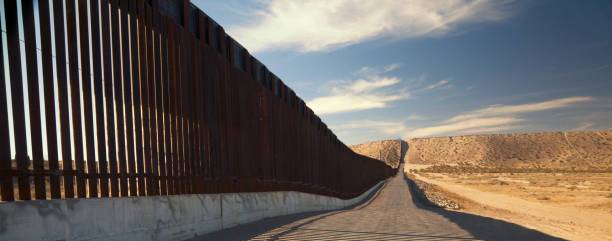
Since at least late 2022, U.S. Border Patrol agents have been detaining people arriving at the U.S./Mexico border in California between two parallel border walls—a primary and a secondary wall near San Ysidro. Border Patrol agents are holding people—including children—on U.S. soil for days or weeks in open-air custody without adequate food, water, shelter, or medical care. CBP has provided only one port-a-potty for hundreds of people and the smell of feces is overwhelming.

Extended periods exposed to the elements without sufficient water, food, or sanitary conditions have caused migrants to suffer from serious medical conditions for which Border Patrol is not providing adequate care. SBCC submitted images of a man with a severely infected leg injury, a woman experiencing a severe allergic reaction, and described a child who suffered an epileptic seizure.

The May 2023 complaint explained that these conditions, and the prolonged period of time that Border Patrol is holding people between the walls, are in clear violation of CBP’s own detention standards and international law governing the treatment of migrants.

In September 2023, CRCL responded to the complaint, indicating that it had expressed concerns to CBP about this open-air detention, but that the people detained there had been processed – suggesting the issue had been resolved.

On December 13, 2023, Al Otro Lado, the American Friends Service Committee, Border Kindness, the Center for Gender & Refugee Studies, the International Refugee Assistance Project, and the National Immigration Law Center joined SBCC in filing a new complaint with CRCL documenting the ongoing detention between the walls at San Ysidro and the expanded use of open-air detention near the remote desert town of Jacumba, California. This complaint is similarly supported by declarations and photographic evidence.

The December 2023 complaint reports that CBP continues to hold people between fences at San Ysidro in dangerous conditions. In October 2023, just weeks after CRCL closed its initial investigation, a 29-year-old Guinean woman died after suffering a medical emergency.

Rather than respond to CRCL’s concerns, CBP has expanded outdoor detention. The complaint documents new open-air detention sites near Jacumba — a remote town where temperatures can drop a low as 20 degrees in the winter and hit over 100 degrees in the summer. CBP is holding asylum seekers and other migrants along the border fence with only donated tents or tarps to protect them from the elements. People are trapped by mountains, the harsh surrounding desert, and constant surveillance. The daily population at these sites ranges from 100 to over 750, yet CBP provides only limited water and snacks. Volunteers offer the only meals, shelter (in the form of tents), and warm clothing available. CBP does not provide adequate medical care and in some instances interferes with migrants and volunteers seeking to obtain emergency services. In December, a 13-year-old boy died after EMS took over an hour to reach the remote site. The December 2023 complaint urges CRCL to reopen its investigation and ensure that CBP, at a minimum, comply with its own detention standards if it cannot promptly process people.

Documents:

Counsel: Al Otro Lado, the American Friends Service Committee, Border Kindness, the Center for Gender & Refugee Studies, the International Refugee Assistance Project, the National Immigration Law Center, Southern Border Communities Coalition

Contact: Erika Pinheiro | Al Otro Lado

Madrigales Vasquez, et al., v. United States of America

Madrigales Vasquez, et al., v. United States of America, No. 3:23-cv-5397, (W.D. Wash., filed May 2, 2023)

On February 21, 2021, a family of asylum seekers—two minor children and their parents—entered the United States seeking protection from persecution in Guatemala. After a long and arduous journey on foot and by bus, federal immigration officers arrested the family, dropped them off under an international border bridge near McAllen, Texas, and held the family there for three days, where hundreds of other migrants were similarly being held. 

The family expressed to officers their intention to apply for asylum right away, but officers ignored the family’s vulnerable situation and instead continued to detain them under the bridge in inhumane and unsafe conditions that violated their basic rights and sense of dignity as human beings. 

While held under the bridge, the family lacked adequate access to basic necessities, including food, clothing, shelter, and medical care. They were constantly exposed to the elements and forced to sleep on the bare ground, with hardly any protection from freezing night conditions. For three days, they constantly felt cold, sore, famished, and exhausted. When one of the parents became ill from the conditions, she was denied medical care. Moreover, officers put the family and other asylum seekers at risk of contracting COVID-19 during a time when the vast majority of the United States and world population remained unvaccinated. In the holding area under the bridge, asylum seekers had no access to running water or hygiene items like soap, and social distancing was impossible in the crowded conditions.

During their three days under the bridge, officers refused to provide the family with any explanation regarding their situation, why they were detained, or what was going to happen to them. As a direct result of this unlawful conduct, the family suffered severe physical, mental, and psychological harm. 

On June 21, 2022, the family submitted an administrative claim under the Federal Tort Claims Act (FTCA) against the government actors who detained them, and on May 2, 2023, they filed a complaint in federal court in the Western District of Washington, where they currently reside. Defendant filed a motion to dismiss for lack of subject matter jurisdiction and failure to state a claim on August 7, 2023. Briefing on the motion to dismiss was completed on September 22, 2023. On March 28, 2024, the court granted defendant’s motion to dismiss, agreeing with the government’s argument that plaintiffs’ claims are barred by the FTCA’s discretionary function exception (DFE), given that CBP made a policy decision to address the overburdened and under-resourced situation. The court therefore dismissed plaintiffs’ claims for lack of subject matter jurisdiction.

Documents:

Counsel: Northwest Immigrant Rights Project

Contact: Matt Adams | Northwest Immigrant Rights Project | 206.957.8611 | matt@nwirp.org

Bautista v. Mayorkas

Bautista v. Mayorkas, No. 3:22-cv-1185 (S.D. Cal., filed Dec. 8, 2022)

Plaintiff, Mr. Bautista, filed a complaint against the Department of Homeland Security (DHS) and Customs and Border Protection (CBP) seeking the return of his vehicle. Plaintiff alleges violations of the Fourth, Fifth, and Fourteenth Amendments.

On November 4, 2021, Plaintiff’s wife, who is the registered owner of the vehicle, met a friend in Tijuana, Mexico to give her a ride to her job in San Diego. While there, the wife loaned her car to her friend while the wife went to the store. Without the wife’s knowledge, her friend picked up two people who did not have legal status in the United States and concealed them in the trunk. When the wife and friend were stopped at the San Ysidro checkpoint, the wife was made aware of the two individuals. The wife was released without criminal charge because her friend was operating the vehicle when it was seized.

That same day, CBP seized the vehicle. The wife received a Notice of Seizure on November 9, 2021, indicating that the CBP was commencing forfeiture action against the vehicle and provided guidance on how to proceed. On November 19, 2021, the wife filed a petition for return with CBP. Following receipt of notice of seizure, Plaintiff and his wife both filed petitions for return of the seized vehicle with CBP. CBP did not return the vehicle.

On August 12, 2022, Plaintiff filed a complaint with the Southern District of California. On September 21, 2022, Plaintiff filed an ex parte motion for preliminary injunction enjoining Defendants from disposing of his 2021 Nissan Sentra. After full briefing, on October 11, 2022, the court denied the ex parte motion for preliminary injunction as moot because Defendants declared they would hold onto the vehicle until judgment is entered in the case. Subsequently, Defendant filed a motion to dismiss for lack of subject matter jurisdiction because the Civil Asset Forfeiture Act of 2000 divests the court of jurisdiction. The district court granted Defendants’ motion, finding it lacked jurisdiction over the claimant’s challenge to merits of agency’s determination. The Court also denied Plaintiff’s request for leave to file an amended complaint on December 8, 2022.

Documents:

Counsel: Jason E. Ankeny, Jason E. Ankeny P.S.; Kirsten Zittlau, Zittlau Law

Anibowei v. Morgan

Anibowei v. Morgan, No. 20-10059 (5th Cir., appeal filed Jan. 17, 2020); Anibowei v. Wolf, Civil Action No. 3:16-CV-3495 (N.D. Tex., filed Dec. 23, 2016)

Anibowei filed a lawsuit to challenge the actions of the CBP officers—and the underlying CBP and ICE directives—as violative of the First Amendment, Fourth Amendment, and the Administrative Procedure Act (APA). He sought damages under Bivens v. Six Unknown Agents as well as injunctive and declaratory relief. Defendants moved to dismiss the complaint. On February 14, 2019, the court dismissed Anibowei’s claims under Bivens as improperly pled, with leave to replead. On March 14, 2019, Anibowei filed a second amended complaint, and shortly thereafter filed a motion for summary judgment and for a preliminary injunction. On January 14, 2020, the district court denied Anibowei’s motions for partial summary judgment and a preliminary injunction. 

George Anibowei—a U.S. citizen and licensed attorney based in Dallas, Texas—was repeatedly stopped and questioned by Customs and Border Protection (CBP) officers when returning to the United States from international travel. On several such occasions, CBP officers also searched Anibowei’s cellphone and copied the cellphone’s contents without a warrant. CBP conducted these nonconsensual searches of Anibowei’s cellphone in accordance with CBP and ICE internal directives that permit the search of electronic devices at the border without individualized suspicion.

On January 17, 2020, Anibowei appealed the district court’s decision, asking the Fifth Circuit to rule on whether searching a cellphone without exigent circumstances or a warrant violates the Fourth Amendment, even if said search is conducted at the U.S. border. On December 3, 2020, the Fifth Circuit heard oral argument in this case. On June 19, 2023, the Fifth Circuit released its decision affirming the denial of the preliminary injunction, finding that Anibowei did not show a substantial risk of irreparable harm. The court also declined to review the district court’s denial of Anibowei’s motion for summary judgment for lack of jurisdiction, and so did not rule on the question of whether the search violated the Fourth Amendment.

On August 30, 2023, Anibowei filed a petition for writ of certiorari with the Supreme Court, which was denied on January 8, 2024.

Documents

Counsel: Arnold & Porter
Contact: Andrew Tutt | Andrew.tutt@arnoldporter.com

FTCA Suit on Behalf of U.S.-Citizen Child Held by CBP for 30 Hours

J.A.M., et al., v. United States of America, et al., No. 3:22-cv-00380 (S.D. Cal., filed Mar. 21, 2022); No. 24-5029 (9th Cir., filed Aug. 15, 2024)

The family of a 9-year-old girl and 14-year-old boy filed a damages suit under the Federal Tort Claims Act after the children, both U.S. citizens, were held in custody at the San Ysidro Port of Entry – the boy for more than 12 hours and his sister for more than 30 hours. The complaint recounts how J.A.M. and her brother O.A.M. were falsely imprisoned in San Ysidro and coerced into making false confessions about the girl’s identity. Officers insisted to the children that the girl was actually their cousin, who is not a U.S. citizen.

J.A.M. and her brother O.A.M. were on their way from Tijuana to school in San Diego with a family friend. Though both children presented officers with valid U.S. passports, a CBP officer sent them to secondary inspection, then to a holding area. According to the children, CBP officers interviewed them about other young relatives their age and then pressured them to sign false statements claiming that J.A.M. was actually their cousin. The children said they were told that O.A.M. would be taken to jail for smuggling if they did not sign. CBP allegedly intended to have the Mexican consulate interview J.A.M. to verify her identity, but claimed an appointment was not available until the following morning.

Upon learning her children had not made it out of the port of entry, their mother, Ms. Medina Navarro, left the medical facility where she was awaiting surgery to inquire at the port of entry for her children. At first, officers denied having the children in custody. More than 12 hours after her children were first taken into custody, Ms. Medina Navarro received a call that C.B.P. had her son in custody with a girl who was not her daughter, and was told she could come pick up her son. Though Ms. Medina Navarro took additional documents to prove the identity of her daughter, officers did not release J.A.M. to her mother until after J.A.M.’s interview with the Mexican consulate the following day, 33 hours after she was first taken into custody.

The family filed administrative Federal Tort Claims Act complaints. CBP denied the claims in full on September 29, 2021, and the family filed suit on March 21, 2022. The government filed a motion to dismiss for lack of jurisdiction or motion for summary judgment, which was denied on July 21, 2022, and subsequently filed an answer to the complaint on August 4, 2022. On September 28, 2022, the court held a case management conference where settlement negotiations broke down. Discovery was completed and a bench trial was held beginning on March 19, 2024, and completed March 22, 2024.

On June 21, 2024, the court found the United States liable under the FTCA for false imprisonment, intentional infliction of emotional distress, and negligence. The court further awarded $250,000 to Ms. Medina Navarro, $175,000 to O.A.M., and $1.1 million to J.A.M. in damages.

The United States appealed the Court’s judgment on August 15, 2024, with briefing scheduled to begin on September 25, 2024.

Counsel: Law Offices of Joseph M. McMullen

Contact: Joseph Mark McMullen ǀ (619) 501-2000 ǀ joe@imm-legal.com

Press: Kate Morrissey, Lawsuit alleging border officials falsely imprisoned 9-year-old U.S. citizen girl passes legal hurdle, The San Diego Tribune, Jul. 29, 2022.

Harvard Immigration and Refugee Clinical Program v. U.S. Customs and Border Protection

Harvard Immigration and Refugee Clinical Program v. U.S. Customs and Border Protection, No. 1:22-cv-10301 (D. Mass., filed Feb. 23, 2022)

On February 23, 2020, the Harvard Immigration and Refugee Clinical Program (the Clinic) sued Customs and Border Protection (CBP) under the Freedom of Information Act (FOIA). The Clinic filed the FOIA in response to CBP denying entry to several Harvard students of Middle Eastern descent—many from Iran. Some were given expedited removal orders or had their visas revoked, even though the Department of State performed extended security checks during the visa processing.

The FOIA request identified three categories of information the Clinic sought from CBP: (1) records regarding the expedited removal of students at a port of entry; (2) records regarding withdrawal of admission by students at a port of entry; and (3) directives, policies, and communications by CBP regarding visa holders at ports of entry. CBP failed to provide an adequate response. The Clinic requested documents starting January 1, 2012, and the only documents CBP produced were from 2020. CBP also failed to produce any policy directives.

The Clinic filed an administrative appeal, requesting the responsive records and all non-exempt portions of the records. The administrative appeals unit ordered CBP to conduct a new search, but CBP failed to timely respond, and the Clinic sued. Since the initial filing, CBP filed its answer to the complaint, and the parties have filed periodic status reports as production in response to the FOIA request continues. As of a status report filed August 2025, the parties have reached an end result of the litigation concerning the document-related dispute and are addressing the issue of attorneys’ fees.

On September 16, 2025, the district court administratively closed the case, noting that the issue of attorneys’ fees is the only outstanding task. The judge has allowed for further status reports from defendants following the October-November 2025 federal government shutdown.

Documents:

Counsel: Harvard Immigration and Refugee Clinical Program, Harvard Law School
Contact: Sabrineh Ardalan | sardalan@law.harvard.edu