FTCA Wrongful Death Administrative Complaint for 8-Year-Old Anadith Danay Reyes Alvarez

Eight-year-old Anadith was born with sickle cell disease (SCD) and a heart condition. At five years old, she had open heart surgery to repair a heart defect. On May 9, 2023, Anadith’s parents crossed the U.S.-Mexico border with Anadith and her two older siblings—fleeing discrimination and persecution in Honduras as Afro-Indigenous people. Shortly after crossing, Customs and Border Protection (CBP) arrested the family. Anadith’s mother Mabel told a CBP officer about Anadith’s medical condition and provided medical records of her heart defect. Mabel repeated this information upon medical intake. While in CBP custody, Anadith contracted the flu, but CBP did not seek emergency treatment from a doctor, despite her condition. By May 16, 2023, Anadith’s fever reached nearly 105 degrees, but CBP refused Mabel’s request to call an ambulance. On May 17, Anadith and Mabel visited the CBP medical station at least four times—but each time the providers refused to call an ambulance. After the fourth visit, Mabel carried Anadith—who could not walk—and felt the girl die in her arms. Only then did CBP call an ambulance—and refused to allow Mabel to ride with her daughter, instead forcing her to ride in a separate car with CBP. Anadith was pronounced dead at the hospital. In May 2024, the Texas Civil Rights Project and Haitian Bridge Alliance filed a Freedom of Information Act (FOIA) lawsuit to obtain the medical records and other documents related to Anadith while in CBP custody.

On May 1, 2025, Anadith’s parents—Mabel and Rossel—submitted an administrative claim under the Federal Tort Claims Act (FTCA) alleging that CBP was negligent and recklessly or intentionally inflicted emotional distress on Anadith and her family. They seek compensation.

Documents:

Counsel: Texas Civil Rights Project ǀ Haitian Bridge Alliance

Contact: Kassandra Gonzalez ǀ Texas Civil Rights Project ǀ kassandra@texascivilrightsproject.org

Press:

RAICES v. Noem

Refugee and Immigrant Center for Education and Legal Services, et al. v. Kristi Noem, et al., No. 1:25-cv-00306 (D.D.C., filed Feb. 3, 2025) and No. 25-5243 (D.C. Cir., filed Jul. 3, 2025)

On January 20, 2025, President Trump issued a proclamation invoking Immigration and Nationality Act (INA) Section 212(f), 8 U.S.C. § 1182(f), and his purportedly inherent constitutional authority, to summarily expel noncitizens who entered without a visa after the date of the Proclamation and prohibit them from applying for asylum and obtaining other procedural and substantive protections under the INA.

Plaintiffs Refugee and Immigrant Center for Education and Legal Services (RAICES), Las Americas Immigrant Advocacy Center, and the Florence Immigrant & Refugee Rights Project filed suit on February 3 to block the Proclamation. On February 19, 2025, Plaintiffs amended the complaint to add individuals impacted by the Proclamation, moved for class certification, and sought a preliminary injunction. Plaintiffs assert that the Proclamation violates the INA’s asylum and withholding of removal provisions, the statutes implementing the Convention Against Torture, and the Trafficking Victims Protection Reauthorization Act (TVPRA). Both parties subsequently moved for summary judgment.

On July 2, 2025, the court granted in part plaintiffs’ motions for summary judgment and class certification, denied plaintiffs’ motion for preliminary injunction as moot, and deferred ruling on the remaining portions of the cross-motions. The court certified a class consisting of “all individuals who are or will be subject to Proclamation 10888 and/or its implementation within the United States.” Defendants appealed the decision to the D.C. Circuit Court and sought emergency stay, which the court of appeals granted as to the district court’s order prohibiting the application of the 212(f) Proclamation to asylum applications, but denied as to the district court’s order prohibiting application of the Proclamation to withholding of removal and protection under the Convention Against Torture. The district court has ordered that further briefing will be held in abeyance pending a decision on the appeal. On November 3, 2025, oral argument was heard at the D.C. Circuit.

Documents:

Counsel: ACLU Immigrant Rights Project ǀ National Immigrant Justice Center ǀ Texas Civil Rights Project ǀ Center for Gender & Refugee Studies ǀ ACLU Foundation of the District of Columbia ǀ Jenner & Block LLP ǀ Texas Civil Rights Project ǀ ACLU Foundation of Texas ǀ Gibbs Houston Pauw

Contact: Lee Gelernt ǀ ACLU Immigrant Rights Project ǀ lgelernt@aclu.org ǀ Keren Zwick ǀ National Immigrant Justice Center ǀ kzwick@immigrantjustice.org ǀ Melissa Crow ǀ Center for Gender & Refugee Studies ǀ crowmelissa@uclawsf.edu

United Farm Workers v. Noem

United Farm Workers, et al., v. Kristi Noem, et al., No. 1:25-cv-00246 (E.D. Cal., filed Feb. 26, 2025)

In January 2025, Border Patrol agents travelled more than 300 miles inland to Bakersfield, California and initiated “Operation Return to Sender,” a weeklong sweep of Kern County targeting primarily Latino neighborhoods. During the operation, Border Patrol stopped, detained, and arrested people of color or those who appeared to be farmworkers or day laborers, without reasonable suspicion that they were removable. Border Patrol violated federal law by conducting warrantless arrests without making individualized assessments of flight risk. Border Patrol transported people to El Centro Border Patrol station, detained them incommunicado, and coerced people into accepting voluntary departure.

On February 26, 2025, United Farm Workers and five individuals—including a U.S. citizen and a lawful permanent resident—sued on behalf of three proposed classes of people targeted by Border Patrol. Plaintiffs argued that Border Patrol’s enforcement actions violated the Immigration and Nationality Act, 8 U.S.C. § 1357, and immigration regulations because they arrested people without a warrant without probable cause of flight risk. Plaintiffs also brought claims under the Fourth Amendment, for suspicionless stops, and the Fifth Amendment, for coerced voluntary departure. Plaintiffs subsequently sought a preliminary injunction on behalf of two classes – Suspicionless Stop Class and Warrantless Arrest Class.

On April 29, 2025, the district court provisionally certified the Suspicionless Stop Class and the Warrantless Arrest Class. The court then granted Plaintiffs’ motion for a preliminary injunction, enjoining Border Patrol from: (a) making stops without reasonable suspicion the person is present in the United States in violation of U.S. immigration law and (b) making warrantless arrests without probable cause of flight risk. The court further ordered Border Patrol to (a) document arrests and provide that documentation to class counsel, (b) broadcast a policy regarding stops and arrests, and (c) train Border Patrol agents in the requirements of the policy and the preliminary injunction. Defendants have appealed the decision to the Ninth Circuit and filed a motion to dismiss with the district court.

On October 6, 2025, the district court addressed the government’s motion to dismiss and discussion of the U.S. Supreme Court’s September 8, 2025 order in Noem v. Vasquez Perdomo, in which it raises serious questions as to Plaintiffs’ standing to pursue their claims for prospective injunctive relief. The court found its evaluation of the motion to dismiss—and by extension the motion to enforce—requires further briefing on this subject. A hearing has been scheduled for December 1.

Counsel: ACLU Foundation of Northern California ǀ ACLU Foundation of Southern California ǀ ACLU Foundation of San Diego & Imperial Counties ǀ Keker, Van Nest & Peters LLP

Contact: Bree Bernwanger ǀ ACLU Northern California ǀ bbernwanger@aclunc.org

Center for Gender and Refugee Studies v. Customs and Border Protection

Center for Gender and Refugee Studies, et al. v. U.S. Customs and Border Protection, No. 3:24-cv-01601 (N.D. Cal., filed Mar. 14, 2024)

Since at least late 2022, Customs and Border Protection (CBP) has forced thousands of migrants to await processing for asylum or other relief in dangerous and squalid open-air detention sites along the California-Mexico border without reliable access to food, water, shelter, warmth, sanitation, or medical care.Initially located near San Ysidro, CBP has expanded its use of outdoor detention to locations near Jacumba and reports indicate CBP has added new locations in the Otay Mountain Wilderness.

Al Otro Lado submitted two requests under the Freedom of Information Act (FOIA) – one in October 2023 and a second, joined by the Center for Gender and Refugee Studies (CGRS), in December 2023, seeking records regarding CBP’s activities at these detention sites – what CBP calls “gathering sites.” The FOIAs seek to uncover CBP’s policies and practices surrounding the detention sites, including their supervision and monitoring of the sites. When CBP failed to respond to either request, CGRS and Al Otro Lado filed suit under FOIA to compel the production of responsive records.

Documents:

Counsel: Al Otro Lado & Center for Gender and Refugee Studies

Contact: Edith Sangueza | Center for Gender and Refugee Studies | sanguezaedith@uclawsf.edu

Osorio v. Customs and Border Protection

Osorio v. U.S. Customs and Border Protection, No. 1:23-cv-03779 (D.D.C., filed Dec. 20, 2023)

Plaintiff Lianet Alvarez Osorio learned that her mother, Idania, had died while in Customs and Border Protection (CBP) custody from a CBP press release issued two weeks after her mother’s passing. Ms. Osorio knew that her mother would be arriving at the border at Eagle Pass, Texas, and processed by CBP on January 2, 2023. The next day, she learned from another woman that her mother had been suffering from chest pains while in CBP custody. For the next two weeks Ms. Osorio frantically sought information about her mother’s whereabouts, only to have a family member call her with news of a press release announcing the death of a woman who matched her mother’s description. Contrary to CBP policy, nobody from CBP personally notified Ms. Osorio. Nor has CBP provided Ms. Osorio with more information about the circumstances of her mother’s death beyond what was included in the press release.

On March 8, 2023, Ms. Osorio filed a request under the Freedom of Information Act (FOIA), seeking records regarding her mother’s death, including any CBP investigation, and information regarding the circumstances of the press release. When CBP failed to timely respond, Ms. Osorio filed suit on December 20, 2023, and subsequently amended her complaint on February 6, 2024.  In her amended complaint, Ms. Osorio alleges that a recent whistleblower complaint to Congress alleging serious mismanagement, understaffing, and incompetence by Loyal Source Government Services – the medical contractor to CBP border facilities – raised more questions about her mother’s death and heightened the need for transparency.

Documents:

Counsel: Al Otro Lado

Contact: Andrew Fels | Al Otro Lado | andrew@alotrolado.org

National Immigration Project v. Department of Homeland Security

National Immigration Project, et al., v. U.S. Department of Homeland Security, et al., No. 1:24-cv-00641 (D.D.C. filed March 6, 2024)

Following media reports that Customs and Border Protection (CBP) and the U.S. Attorney’s Office in Del Rio, Texas are disproportionately targeting individuals from Muslim-majority countries for prosecution, the National Immigration Project and Muslim Advocates filed a request under the Freedom of Information Act (FOIA) seeking data regarding the individuals prosecuted for certain offenses in the U.S. District Court for the Western District of Texas (Del Rio).

In August 2023, The L.A. Times first reported that federal prosecutors in Del Rio, Texas were charging people from Muslim-majority countries with illegal entry (8 U.S.C § 1325), illegal reentry (8 U.S.C § 1326), and the obscure offense of failing to properly report at entry (19 U.S.C. § 1459) at high rates, even though they make up a very small percentage of the people crossing the U.S.-Texas border.

On January 5, 2024, the National Immigration Project and Muslim Advocates submitted their FOIA request to the Department of Justice and CBP – the agency generally responsible for referring people apprehended at the border for federal prosecution. The request seeks three categories of records: (1) records of the number of people prosecuted in Del Rio for the three relevant offenses, including their national origin; (2) records regarding the number of referrals made by CBP to the U.S. Attorney’s Office in Del Rio for the relevant offenses, including national origin information; and (3) records showing the number of arrests by the Del Rio Sector of CBP, including national origin information.

When CBP and the Department of Justice failed to respond within the 30-day deadline set by FOIA, the National Immigration Project and Muslim Advocates filed suit on March 6, 2024, seeking to compel production of responsive records.

Documents:

Counsel: National Immigration Project; Muslim Advocates

Contact: Khaled Alrabe | National Immigration Project | khaled@nipnlg.org

East Bay Sanctuary, et al., v. Biden, et al.

East Bay Sanctuary, et al., v. Joseph R. Biden, President of the United States, et al., No. 4:18-cv-06810 (N.D. Cal., amended complaint filed May 11, 2023) and No. 23-16032 (9th Cir., filed July 26, 2023)

Anticipating the end of the policy that allowed for the expulsion of asylum-seekers arriving at the U.S./Mexico border under Title 42, on May 10, 2023, the Biden administration issued a new final rule that bars certain asylum seekers from asylum if they did not apply for asylum in a country they passed through on their way to the United States or failed to obtain advance permission to arrive at a port of entry or travel to the United States. The exceptions to this new asylum ban are extremely narrow. This is the third in a string of asylum bans attempting to bar many people from the asylum process. The first two originated under the Trump administration and were found unlawful by the district court in this case and the Ninth Circuit.

Plaintiffs originally filed this lawsuit on November 9, 2018, in response to the Trump administration’s first asylum ban, which barred anyone who did not enter the United States at a port of entry from receiving asylum. The district court found this first ban unlawful and enjoined it. The Ninth Circuit affirmed those orders on February 28, 2020, (and in an amended opinion on March 24, 2021). The case was stayed.

On July 16, 2019, East Bay Sanctuary and others filed a related lawsuit in the same court challenging the second asylum ban, which barred those who did not apply for asylum in a country they transited through on their way to the United States from seeking asylum in the United States. The district court similarly preliminarily enjoined the second asylum rule as likely unlawful and the Ninth Circuit ultimately affirmed that order on July 6, 2020, (amended April 8, 2021).

On May 11, 2023, Plaintiffs sought leave to amend their complaint in this case to challenge the third asylum ban. Defendants consented to the filing of the amended complaint and to lifting the stay on the case. Plaintiffs argue that the new rule is unlawful for the same reasons the first two asylum bans were unlawful. It will effectively eliminate asylum for nearly all non-Mexican asylum seekers who enter between designated ports of entry, and even for those who present at a port of entry if they have not first secured an appointment.

On July 25, 2023, the district court granted Plaintiffs’ motion for summary judgment and denied Defendants’ cross-motion, vacating the rule yet again. The government appealed the order, and on August 3, the Ninth Circuit ruled that the administration’s transit ban can continue through September, staying the lower court decision. The Ninth Circuit held oral argument on November 7, 2023, and the parties await a decision of the court. On February 21, 2024, the Ninth Circuit granted a motion filed by the parties to hold the case in abeyance pending settlement negotiations in this case and a related case, M.A. v. Mayorkas, No. 1:23-cv-1843 (D.D.C.). On October 21, 2024, the Supreme Court denied a petition for writ of certiorari filed by the states of Kansas, Alabama, Georgia, Louisiana, and West Virginia, challenging the Ninth Circuit’s order granting the hold.

Documents:

Counsel: ACLU Immigrant Rights Project | Center for Gender & Refugee Studies | National Immigrant Justice Center | ACLU of Northern California

Contact: Katrina Eiland | ACLU Immigrant Rights Project | keiland@aclu.org

Press:

American Oversight v. U.S. Department of Homeland Security, et al.

American Oversight v. U.S. Department of Homeland Security, et al., No. 1:23-cv-01395 (D.D.C., filed May 17, 2023)

On December 20, 2018, then-Secretary of Homeland Security, Kirstjen M. Nielsen, announced a new government policy, the so-called “Migrant Protection Protocols” (MPP), which would force noncitizens seeking admission from Mexico to return to Mexico to await their removal proceedings. The Trump administration voiced its intention to implement the policy “on a large scale basis,” beginning first with San Ysidro Port of Entry in California on January 28, 2019. MPP sparked litigation and in 2021, the Biden administration terminated the program. More information about MPP and related litigation is available here.

On May 17, 2023, American Oversight filed a lawsuit under the Freedom of Information Act (FOIA) seeking to compel the release of communications from Trump administration political appointees to anti-immigrant groups concerning MPP. Defendants filed their answer to the complaint on July 26, 2023. As of June 2024, the parties continue to file joint status reports with the court while production is ongoing.

Documents:

Counsel: American Oversight

Contact: Hart W. Wood | American Oversight | hart.wood@americanoversight.org

Civil Rights Complaints Regarding CBP’s Expanded Use of Open-Air Detention

On May 13, 2023, the Southern Border Communities Coalition (SBCC) submitted a complaint to the Department of Homeland Security Office for Civil Rights and Civil Liberties (CRCL). The complaint, which is supported by multiple detailed affidavits and graphic photographs, documents an ongoing Customs and Border Protection (CBP) practice of detaining people outdoors between two fences in deplorable conditions near the San Ysidro port of entry.

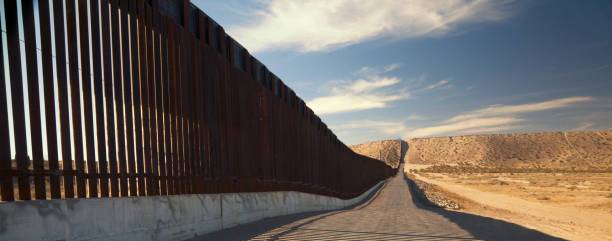
Since at least late 2022, U.S. Border Patrol agents have been detaining people arriving at the U.S./Mexico border in California between two parallel border walls—a primary and a secondary wall near San Ysidro. Border Patrol agents are holding people—including children—on U.S. soil for days or weeks in open-air custody without adequate food, water, shelter, or medical care. CBP has provided only one port-a-potty for hundreds of people and the smell of feces is overwhelming.

Extended periods exposed to the elements without sufficient water, food, or sanitary conditions have caused migrants to suffer from serious medical conditions for which Border Patrol is not providing adequate care. SBCC submitted images of a man with a severely infected leg injury, a woman experiencing a severe allergic reaction, and described a child who suffered an epileptic seizure.

The May 2023 complaint explained that these conditions, and the prolonged period of time that Border Patrol is holding people between the walls, are in clear violation of CBP’s own detention standards and international law governing the treatment of migrants.

In September 2023, CRCL responded to the complaint, indicating that it had expressed concerns to CBP about this open-air detention, but that the people detained there had been processed – suggesting the issue had been resolved.

On December 13, 2023, Al Otro Lado, the American Friends Service Committee, Border Kindness, the Center for Gender & Refugee Studies, the International Refugee Assistance Project, and the National Immigration Law Center joined SBCC in filing a new complaint with CRCL documenting the ongoing detention between the walls at San Ysidro and the expanded use of open-air detention near the remote desert town of Jacumba, California. This complaint is similarly supported by declarations and photographic evidence.

The December 2023 complaint reports that CBP continues to hold people between fences at San Ysidro in dangerous conditions. In October 2023, just weeks after CRCL closed its initial investigation, a 29-year-old Guinean woman died after suffering a medical emergency.

Rather than respond to CRCL’s concerns, CBP has expanded outdoor detention. The complaint documents new open-air detention sites near Jacumba — a remote town where temperatures can drop a low as 20 degrees in the winter and hit over 100 degrees in the summer. CBP is holding asylum seekers and other migrants along the border fence with only donated tents or tarps to protect them from the elements. People are trapped by mountains, the harsh surrounding desert, and constant surveillance. The daily population at these sites ranges from 100 to over 750, yet CBP provides only limited water and snacks. Volunteers offer the only meals, shelter (in the form of tents), and warm clothing available. CBP does not provide adequate medical care and in some instances interferes with migrants and volunteers seeking to obtain emergency services. In December, a 13-year-old boy died after EMS took over an hour to reach the remote site. The December 2023 complaint urges CRCL to reopen its investigation and ensure that CBP, at a minimum, comply with its own detention standards if it cannot promptly process people.

Documents:

Counsel: Al Otro Lado, the American Friends Service Committee, Border Kindness, the Center for Gender & Refugee Studies, the International Refugee Assistance Project, the National Immigration Law Center, Southern Border Communities Coalition

Contact: Erika Pinheiro | Al Otro Lado
Madrigales Vasquez, et al., v. United States of America

Madrigales Vasquez, et al., v. United States of America, No. 3:23-cv-5397, (W.D. Wash., filed May 2, 2023)

On February 21, 2021, a family of asylum seekers—two minor children and their parents—entered the United States seeking protection from persecution in Guatemala. After a long and arduous journey on foot and by bus, federal immigration officers arrested the family, dropped them off under an international border bridge near McAllen, Texas, and held the family there for three days, where hundreds of other migrants were similarly being held. 

The family expressed to officers their intention to apply for asylum right away, but officers ignored the family’s vulnerable situation and instead continued to detain them under the bridge in inhumane and unsafe conditions that violated their basic rights and sense of dignity as human beings. 

While held under the bridge, the family lacked adequate access to basic necessities, including food, clothing, shelter, and medical care. They were constantly exposed to the elements and forced to sleep on the bare ground, with hardly any protection from freezing night conditions. For three days, they constantly felt cold, sore, famished, and exhausted. When one of the parents became ill from the conditions, she was denied medical care. Moreover, officers put the family and other asylum seekers at risk of contracting COVID-19 during a time when the vast majority of the United States and world population remained unvaccinated. In the holding area under the bridge, asylum seekers had no access to running water or hygiene items like soap, and social distancing was impossible in the crowded conditions.

During their three days under the bridge, officers refused to provide the family with any explanation regarding their situation, why they were detained, or what was going to happen to them. As a direct result of this unlawful conduct, the family suffered severe physical, mental, and psychological harm. 

On June 21, 2022, the family submitted an administrative claim under the Federal Tort Claims Act (FTCA) against the government actors who detained them, and on May 2, 2023, they filed a complaint in federal court in the Western District of Washington, where they currently reside. Defendant filed a motion to dismiss for lack of subject matter jurisdiction and failure to state a claim on August 7, 2023. Briefing on the motion to dismiss was completed on September 22, 2023. On March 28, 2024, the court granted defendant’s motion to dismiss, agreeing with the government’s argument that plaintiffs’ claims are barred by the FTCA’s discretionary function exception (DFE), given that CBP made a policy decision to address the overburdened and under-resourced situation. The court therefore dismissed plaintiffs’ claims for lack of subject matter jurisdiction.

Documents:

Counsel: Northwest Immigrant Rights Project

Contact: Matt Adams | Northwest Immigrant Rights Project | 206.957.8611 | matt@nwirp.org